

Extracting Honey at Home: A Simple, Clean Workflow
Honey harvest day is the payoff for a season of work, but it can also turn into a sticky disaster if you are not prepared. Honey gets everywhere, and a little planning turns a chaotic afternoon into a smooth, almost meditative process. The good news is that you do not need a commercial setup. A basic extractor, an uncapping knife, a bucket with a gate, and a clean space will do the job.
Start by choosing your space carefully. A kitchen with hard floors works, but a garage or covered porch is even better because bees will find the honey and try to rob it. If you extract indoors, close windows and doors, and be ready to deal with a few curious bees. Lay down a plastic tarp or old sheets. It saves hours of scrubbing later.
Uncapping and Spinning
Only harvest frames that are at least eighty percent capped. Capped honey is ripe, meaning the bees have dried it down to the right moisture level. Frames with too much uncapped nectar can ferment, so leave them for the bees or test the moisture with a refractometer if you have one.
Uncapping is the messiest step. Use a heated knife, an uncapping roller, or even a fork for small batches. Slice the wax cappings off into a bucket or tray, saving them for later. Cappings hold honey too, and you can drain them and render the wax for candles or salves. Work over a tray so the honey that drips off the frames is captured rather than wasted.
Once frames are uncapped, load them into the extractor. Balance the load so the drum does not wobble. Spin gently at first, then increase speed. If you spin too fast right away, you can blow out the comb. After the first side is mostly empty, flip the frames and spin again. Most extractors are tangential or radial, and each has its own rhythm, so follow the manufacturer's guidance and your own experience.
Let the honey drain from the extractor through a strainer into a settling bucket. A double strainer with coarse and fine mesh removes wax bits and bee parts. Leave the bucket to settle overnight. Any remaining wax and bubbles rise to the top, and you can skim them off before bottling.
Bottling and Cleanup
Bottle into clean, dry jars. Honey is naturally shelf stable and does not need refrigeration. If you want to slow crystallization, you can warm the honey gently, but never overheat it. High heat destroys enzymes and aromatics, and it is one of the easiest ways to ruin a good crop. Warm water baths or a dedicated honey warmer at low temperatures are fine.
Cleanup is easier if you do it before the honey hardens. Soak tools in warm water, not hot, and wipe surfaces with a damp cloth. Hot water can melt wax into your drains, which is a plumbing problem you do not want. A little dish soap and warm water handles most of it.
Finally, label your jars with the harvest date and the source, whether it is wildflower, clover, or something else. A year from now you will be glad you did. Home extraction takes some effort, but there is nothing quite like filling your own jars with honey from your own bees.


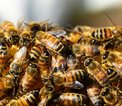
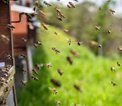

From uncapping to bottling, a calm and organized extraction day makes the sticky work far easier and protects the quality of your honey.
Feeding is one of the most misunderstood parts of beekeeping, so here is a plain guide to syrup ratios, timing, and knowing when to stop.
Varroa mites quietly weaken colonies all season long, and a simple monthly monitoring habit is the best defense you have.
A practical comparison of the three most common backyard hive styles, and how to pick the one that fits your space, budget, and beekeeping goals.
Learn what healthy brood, capped honey, and a good laying pattern actually look like so you can spot trouble before it becomes a crisis.